
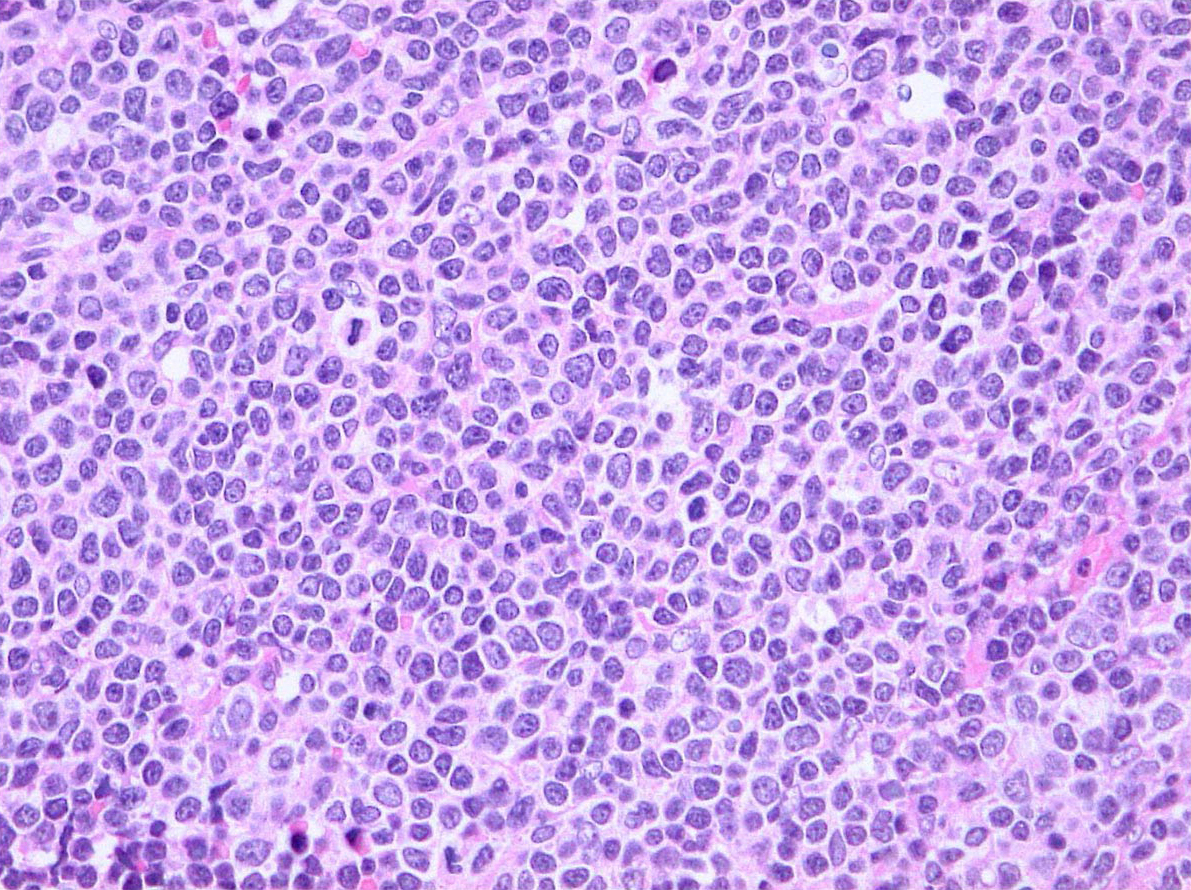
mantle-cell-lymphoma.jpg
13/Feb/2026

On November 14, 2019, the Food and Drug Administration granted accelerated approval to zanubrutinib (BRUKINSA, BeiGene, Ltd.) for adult patients with mantle cell lymphoma (MCL) who have received at least one prior therapy.

Efficacy was evaluated in BGB-3111-206 (NCT03206970), a phase 2 open-label, multicenter, single-arm trial of 86 patients with MCL who received at least one prior therapy. Zanubrutinib was given orally at 160 mg twice daily until disease progression or unacceptable toxicity. Efficacy was also assessed in BGB-3111-AU-003 (NCT 02343120), a phase 1/2, open-label, dose-escalation, global, multicenter, single-arm trial of B‑cell malignancies, including 32 previously treated MCL patients treated with zanubrutinib administered orally at 160 mg twice daily or 320 mg once daily.

The primary efficacy outcome measure in both trials was overall response rate (ORR), as assessed by an independent review committee. In trial BGB-3111-206, FDG-PET scans were required and the ORR was 84% (95% CI: 74, 91), with a complete response rate of 59% (95% CI 48, 70) and a median response duration of 19.5 months (95% CI: 16.6, not estimable). In trial BGB-3111-AU-003, FDG-PET scans were not required and the ORR was 84% (95% CI: 67, 95), with a complete response rate of 22% (95% CI: 9, 40) and a median response duration of 18.5 months (95% CI: 12.6, not estimable).

The most common adverse reactions (≥20%) included decreased neutrophil count, decreased platelet count, upper respiratory tract infection, decreased white blood cell count, decreased hemoglobin, rash, bruising, diarrhea, and cough. The most common serious adverse reactions were pneumonia in 11% and hemorrhage in 5% of patients.

The recommended zanubrutinib dose is 160 mg orally twice daily or 320 mg orally once daily.

anemia.jpg
13/Feb/2026

On November 8, 2019, the Food and Drug Administration approved luspatercept-aamt (REBLOZYL, Celgene Corp.) for treatment of anemia in adult patients with beta thalassemia who require regular red blood cell transfusions.

Efficacy was evaluated in the BELIEVE trial (NCT02604433), a multicenter, randomized, double-blind, placebo-controlled trial enrolling 336 adult patients with beta thalassemia requiring regular red blood cell (RBC) transfusions. Patients were randomized 2:1 to luspatercept-aamt (224) or placebo (112). Luspatercept-aamt was administered subcutaneously once every 3 weeks as long as a reduction in transfusion requirement was observed or until unacceptable toxicity.

The primary efficacy outcome measure was the proportion of patients achieving RBC transfusion burden reduction from baseline of at least 33%, with a reduction of at least 2 units from week 13 to week 24. Of the patients who received luspatercept-aamt, 21.4% achieved the primary endpoint compared with 4.5% of those who received placebo (risk difference 17.0; 95% CI 10.4, 23.6; p<0.0001). The most common adverse reactions (>10%) in patients with beta thalassemia were headache, bone pain, arthralgia, fatigue, cough, abdominal pain, diarrhea, and dizziness.

The recommended starting dose is 1 mg/kg once every 3 weeks by subcutaneous injection.


Who are we

Providing cancer care for all patients. At Houston Cancer Treatment Centers providers are offering cutting edge cancer and hematology treatment for the patients in your neighborhood.

Contact Details

PASADENA CLINIC

4102 Woodlawn Ave Suite 160
Pasadena – TX – 77504
+(832) 879-2942


CLEARLAKE / SOUTH EAST HOUSTON

11914 Astoria Suite 480
Houston, TX 77089
+(832) 879-2942

© 2026 Houston Cancer Treatment Centers. Powered by MeshTech Solutions